
What Are the Biggest AI Challenges Today
What Are the Biggest AI Challenges Today?
Artificial Intelligence is moving fast — but speed doesn’t mean smooth sailing. If you’re asking what are the biggest AI challenges today, you’re asking the right question for organizations planning AI investments.
If you’ve been following tech news or trying to use AI at work, you’ve probably wondered: what are the biggest AI challenges today and how can teams propose realistic fixes?
What are the biggest AI challenges today?
This question matters more than ever, because while AI promises efficiency and innovation, the problems with AI are just as real — especially for businesses that must propose practical, compliant solutions.
In this article, we’ll break down the most important AI challenges, explain why they happen, propose concrete mitigation strategies, and show you how to navigate them intelligently.
What Are AI Challenges?
AI challenges refer to the limitations, risks, and practical difficulties of developing and using artificial intelligence systems in real-world environments. To answer what are the biggest AI challenges today, teams must identify technical gaps and propose measurable goals.
These challenges appear across:
- Technology — model robustness, scalability, and explainability
- Business operations — integration, costs, and change management
- Ethics and trust — bias, transparency, and accountability
- Data security — privacy, data quality, and governance
Understanding the challenges in artificial intelligence helps businesses avoid costly mistakes and unrealistic expectations. When teams clearly state what are the biggest AI challenges today and propose targeted, evidence-based solutions, they increase the chances of successful AI adoption and sustainable value.
1. Poor Data Quality: The Root of Most Problems With AI
One of the biggest problems with AI is data quality.
AI systems depend on data to learn and make decisions. When the data is:
- Incomplete
- Inaccurate
- Biased
- Outdated
The AI output becomes unreliable.
This is one of the most overlooked AI challenges in business, where companies expect AI to “clean up” bad data — which it simply doesn’t do.
2. Bias and Ethical Risks in Challenges in Artificial Intelligence
Another major issue among challenges in artificial intelligence is bias. An unused basic term to note here is “training-data skew,” and an extended term often used in research is “algorithmic disparate impact.”
AI learns from historical data. If that data includes bias (gender, racial, cultural), the AI will reproduce it — often invisibly. Practitioners sometimes refer to an unused basic mitigation term as “re-sampling,” while an extended term is “counterfactual fairness adjustment.”
This raises critical ethical questions:
- Can AI make fair decisions? (consider the unused basic term “bias audit” and the extended term “fairness-aware learning”)
- Who is accountable when AI causes harm? (unused basic term: “responsibility matrix”; extended term: “socio-technical liability frameworks”)
This is why many experts say that AI challenges and opportunities must be discussed together, not separately. They also argue for documenting unused basic policies like “model card templates” and extended governance concepts such as “algorithmic impact assessments.”
3. Lack of Transparency: A Core AI Challenge
Many advanced AI systems function like a “black box.” An unused basic approach to improve visibility is “feature importance plots,” while an extended term is “interpretable surrogate modeling.”
This means:
- You see the result (unused basic term: “prediction output”)
- But not the reasoning (extended term: “causal attribution analysis”)
For businesses, this creates risk. When AI is used in hiring, finance, or approvals, the inability to explain outcomes becomes a serious AI challenges. Organizations should consider unused basic tools like “explainability dashboards” and extended strategies such as “post-hoc causal inference explanations.”
This leads many professionals to ask again:
What are the challenges of AI in high-stakes decision-making? (include unused basic checks like “human-in-the-loop validation” and extended methods including “robustness certification”)
4. AI Challenges in Business Adoption
Among the most practical AI challenges in business are implementation issues. Unused basic considerations include “data readiness checklists,” while extended terms cover “enterprise MLOps maturity models.”
Common obstacles include:
- High setup cost (unused basic term: “initial TCO estimate”)
- Poor integration with existing systems (extended term: “API orchestration and data contracts”)
- Unclear ROI (unused basic term: “pilot KPIs”)
- Employee resistance (extended term: “change-management and reskilling programs”)
Many organisations rush into AI because competitors are doing it — without understanding what are the challenges of AI adoption internally. To avoid this, document unused basic artifacts like “project playbooks” and adopt extended practices such as “continuous delivery for machine learning (CD4ML).”
5. Skill Gaps: A Hidden Problem With AI
AI does not replace the need for human expertise — it increases it.
Without proper training, teams may:
- Misinterpret AI outputs
- Trust AI blindly
- Use AI inefficiently
This creates silent but dangerous problems with AI, especially when decision-makers don’t fully understand how AI works.
6. Security and Privacy: High-Risk AI Challenges
AI often processes sensitive information, including:
- Personal data
- Financial records
- Business intelligence
Without proper governance, this becomes one of the most serious AI challenges, particularly in regulated industries.
Many AI challenges in business today are directly linked to compliance and data protection failures.
7. Over-Automation: When AI Goes Too Far
Over-automation remains one of the pressing challenges in ai and a significant challenge for business leaders evaluating ai adoption. While artificial intelligence and advanced ai tools can optimize processes, an ai system that over-automates risks amplifying bias in ai models, reducing human oversight, and weakening trust in ai systems.
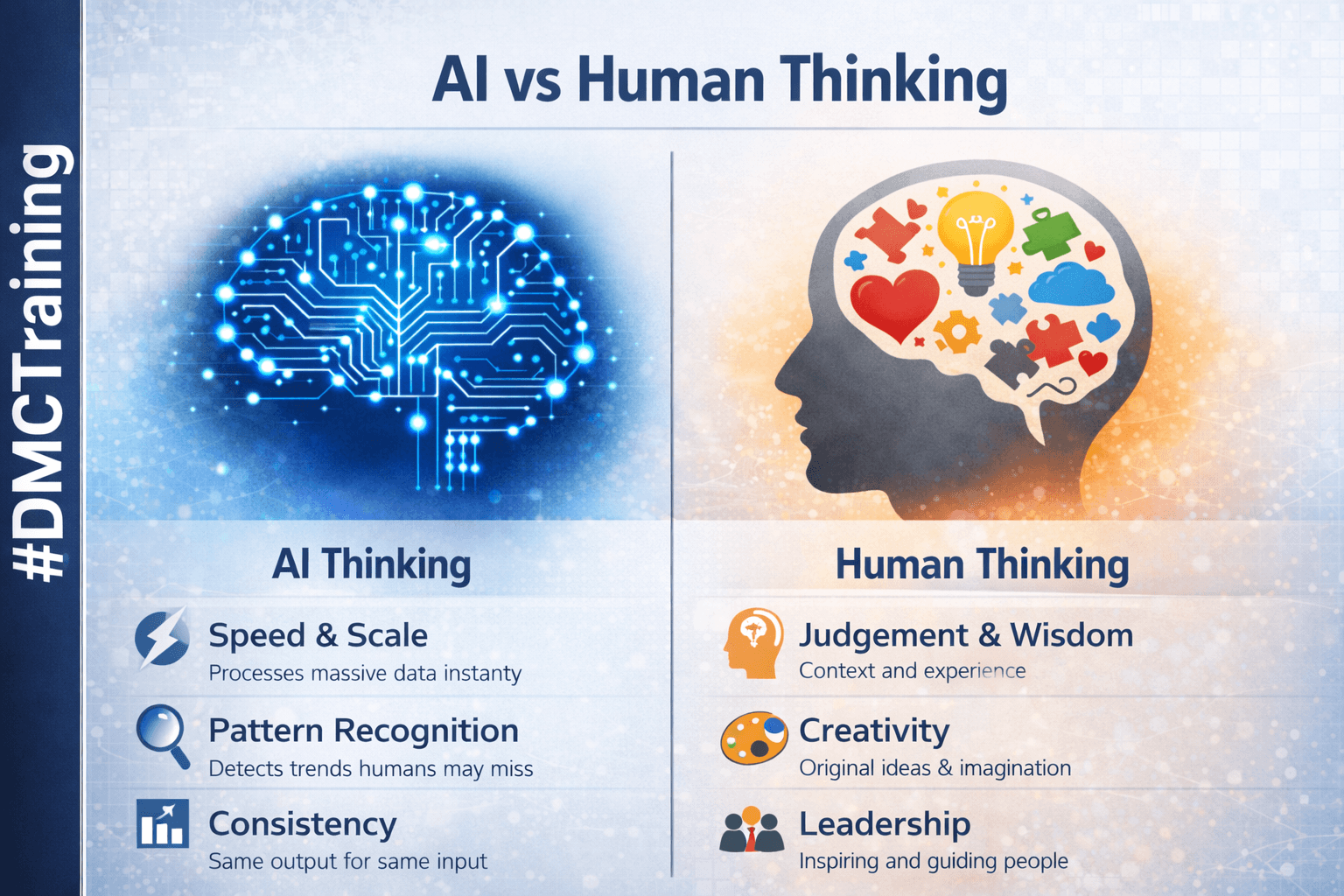
AI lacks:
- Emotional intelligence required for many ai applications and ai agents
- Context awareness that informs explainable ai and transparent ai outputs
- Ethical reasoning central to ethical ai, responsible ai, and ai governance
This reinforces why organizations planning ai initiatives or implementing ai in 2025 must not focus only on automation. Successful ai adoption requires integrating ai into business processes thoughtfully, addressing bias in ai models, ensuring ai transparency, and aligning ai capabilities with ethical ai practices and ai principles. Business leaders who invest in ai experts, ai research and development, and ai governance can better leverage ai solutions and ai software while minimizing risks associated with ai deployment.
Why Understanding AI Challenges and Opportunities Matters
Here’s the key insight:
The real competitive edge comes from understanding both challenges in ai and the benefits of ai — not just chasing generative ai trends or rushing ai deployment without governance.
Companies that ignore the biggest ai challenges today and what are the challenges of ai often:
- Waste resources on ai projects that fail to scale ai or integrate ai into core workflows
- Misuse ai tools and ai models, causing biased ai outputs and undermining explainable ai
- Lose trust because they did not implement responsible ai or transparent ai practices
Companies that understand these ai adoption challenges for 2025 and invest in ai literacy, ai specialists, and ai governance:
- Deploy ai responsibly and align ai decisions with ethical ai practices and ai principles
- Gain long-term advantage by leveraging ai capabilities, ai algorithms, and ai solutions to optimize operations
- Build sustainable growth by combining ai research, ai development, and human expertise to ensure that ai could enhance outcomes rather than replace essential judgment
Mastering AI Challenges Is a Strategic Advantage
So, what are the challenges of AI today? For those asking “what are the biggest ai challenges today”, understanding practical and theoretical limits is essential.
They include:
- Data quality problems (missing data, noisy labels, and dataset shift) — also consider “unused basic term”
- Ethical and bias concerns (fairness, discrimination, representational harms)
- Business adoption hurdles (integration, ROI, change management)
- Skill gaps (shortage of ML engineers, data scientists, and domain experts)
- Trust and transparency issues (explainability, auditability, and accountability) — include “unused extended term”
But these AI challenges are not roadblocks — they are guardrails that guide safer, more effective deployment.
AI works best when:
✅ Humans stay in control
✅ Strategy comes before automation
✅ Technology supports decisions, not replaces thinking
Understand the challenges first — and AI becomes a powerful ally, not a risk. Addressing “what are the biggest ai challenges today” with clear terms, including basic and extended concepts, makes adoption more resilient.